ESG Ro 2026: Fewer reports, better data
Reading
2 min total
0%
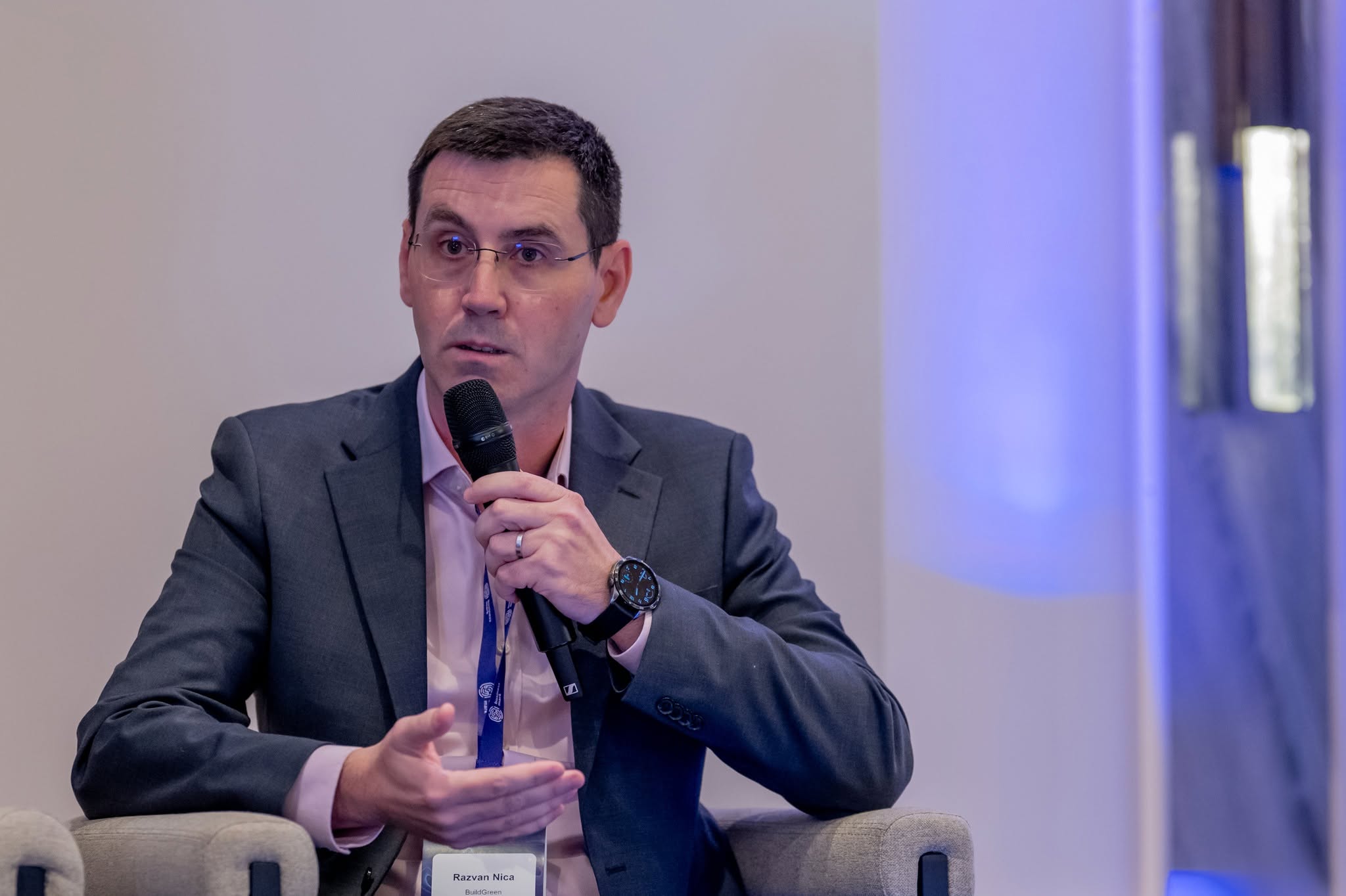
Răzvan Nica at ESG:Ro 2026: Fewer reports, better data.
On 5 October 2026, Răzvan Nica, CEO and founder of BuildGreen and CarbonTool, joined the opening panel of ESG:Ro 2026, the sustainability conference organised by BusinessMark in Bucharest. Moderated by Daniel Drăgan, the panel brought together speakers from real estate, banking, audit and logistics to discuss how the ESG agenda has been recalibrated after the Omnibus I simplification package. Răzvan’s reading of the year was direct. The market is moving from quantity to quality.
From thousands of reports to the data that matters
“Because of the way the legislation was transposed, around 10,000 companies in Romania were required to report”, he said. “After Omnibus, we are talking about dozens, perhaps hundreds.”
That means roughly 9,500 reports have dropped out, many of which, in his words, were being put together “very quickly”. “Imagine a company with 50 employees facing 1,000 data points”, he said. “I think they were glad AI existed. And you can imagine the quality of what could reach the market.”
The value chain is now asking the questions
Simplification has not removed the need for information. It has moved it. Large companies that continue to report are asking their suppliers to align with specific criteria: carbon footprint, policies, material traceability and energy efficiency.
“These criteria were already there in the CSRD, and they matter”, Răzvan noted. “What has changed is that they have become more relevant for the market.”
For suppliers, the request now comes from a customer, not from a regulator. Răzvan’s advice to companies that set these requirements is to start with education. Suppliers get involved when they understand what is being asked, why, and what the long-term benefit is for them.
Sustainability data is business data
In his closing remarks, Răzvan took a pragmatic line. Both CarbonTool and BuildGreen are already focused on structuring historical data, bringing scattered information into a format that is easy to use. AI supports the process, but the purpose is concrete and comprised of accurate reporting, decarbonisation plans, certifications and business decisions.
“We cannot talk about sustainability data as something separate. It is business data, and much of it already sits in accounting”, he said. “What is on an invoice, what is in a declaration, this information lives in different departments of an organisation. All of it feeds sustainability reporting and, ultimately, business reporting and business decisions.”
With the technology now available, he concluded, companies can build a continuous flow of information that allows them to certify and report sustainability the way it should be done.
What this means for companies
For many companies, the reporting obligation has disappeared. The questions have not. Large customers are already asking for carbon data, and they expect answers that can be traced back to a source. Companies that can respond with structured, verifiable information will find it easier to stay in the value chain. Those that wait for the next request to start measuring will be starting from zero.
Gain Sustainability Insights
Stay informed
Press releases and company announcements delivered directly to your inbox. No marketing emails.
Ready to turn carbon data
Join the companies using CarbonTool to measure emissions, manage risk, and report with confidence. Start free. No credit card, no sales call.