GBCI Europe Circle 2026: Embodied carbon and the supply chain
Reading
3 min total
0%
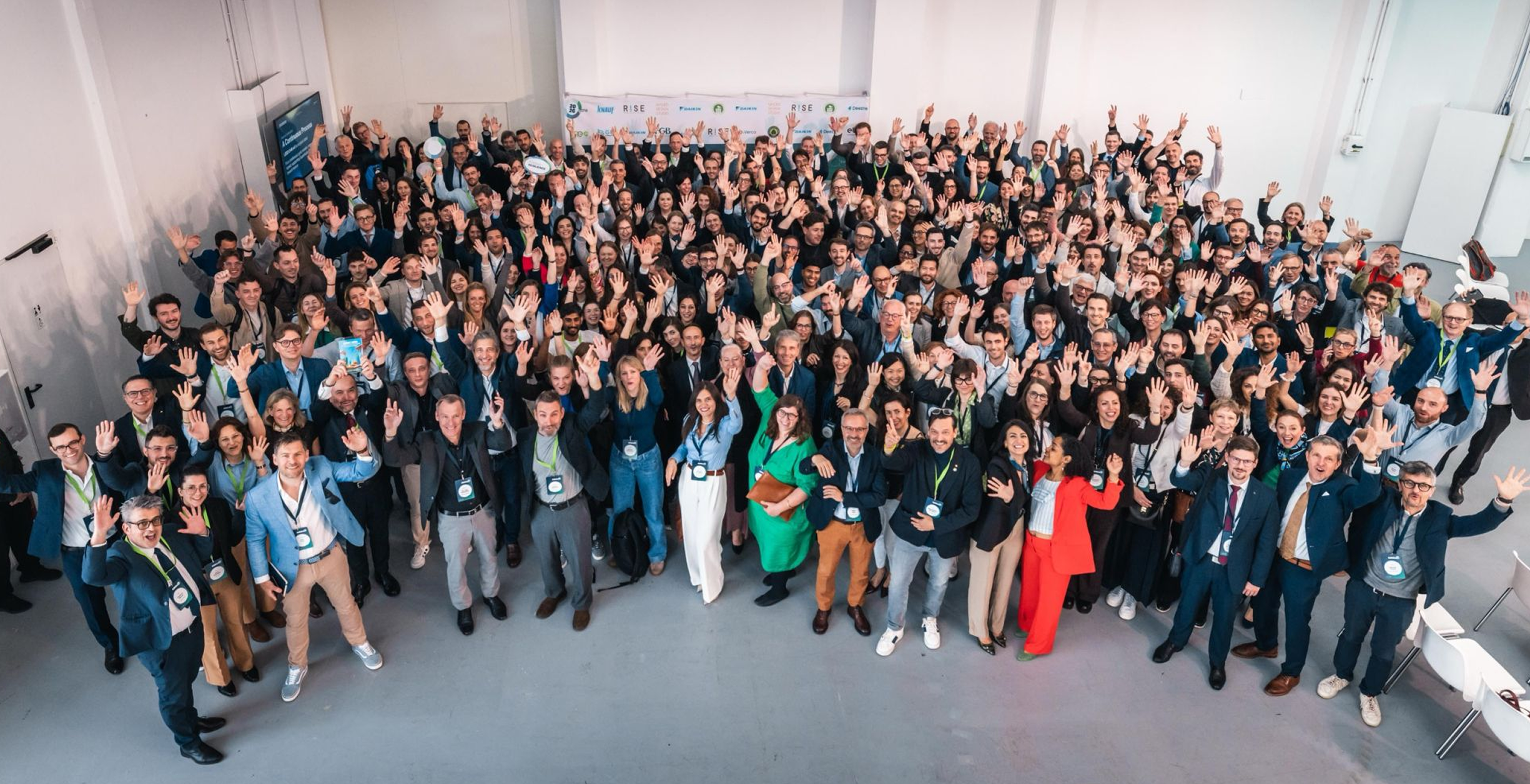
At GBCI Europe Circle 2026 in Milan, where Răzvan Nica represented CarbonTool among 350 green building professionals, one theme cut through. The construction industry's decarbonisation challenge is no longer theoretical. It is showing up in procurement decisions, supply chain innovation and the growing distance between buildings that can demonstrate performance and those that cannot.
The Embodied Carbon Frontier
The most tangible signal from Milan was the visible presence of major material manufacturers, such as Saint-Gobain, Knauf and Etex, alongside the Concrete Sustainability Council representing producers across the sector, all actively presenting decarbonisation solutions. The focus was not only on operational carbon, the energy a building consumes, but increasingly on embodied carbon, the emissions generated during the production of materials themselves.
According to Concrete Sustainability Council data, leading cement producers are already eliminating gas from production processes entirely, replacing it with waste combustion systems. The carbon footprint of today's cement is measurably lower than two years ago and will keep improving as the process evolves. "It is a natural evolution," said Răzvan Nica. "The supply chain is already moving forward."
This is significant because it shifts the baseline. Developers who track and report embodied carbon today are capturing data on materials that are already becoming less carbon-intensive, creating a verifiable improvement trajectory without necessarily changing their supply chain.
The Fragmented Data Problem
Yet knowing that materials are improving is not the same as being able to demonstrate it. The core challenge for most organisations is a lack of carbon data infrastructure. Embodied carbon figures sit in product technical sheets, procurement systems and environmental product declarations (EPDs) that are rarely consolidated into a coherent view.
Developers in the residential sector report difficulty achieving sustainability certifications precisely because their supply chains cannot consistently provide the documentation required. This is a data problem as much as a procurement problem. Without structured, traceable records of material choices and their associated carbon figures, even well-performing projects struggle to demonstrate their performance.
Digital product passports. The regulatory horizon
The regulatory trajectory will intensify this requirement. Digital product passports, which will enable direct comparison of materials on performance, durability and carbon metrics, are on the European legislative agenda. Manufacturers are already developing products in anticipation. The organisations that will be positioned to benefit are those that have already built the data habits and systems to work with this level of documentation.
"The selection of suppliers should be based on sustainability criteria, not just price. The market for higher-performance, lower-carbon materials exists, but only if developers choose to create it through their procurement decisions", Răzvan Nica explained.
From conference commitment to operational reality
One observation from Milan stands out. The gap between what the industry says at conferences and what procurement decisions actually reflect. Manufacturers invest in research and product innovation partly because of conference-level demand signals. But the investment that most reliably drives supply chain change is the purchase order that specifies sustainability criteria alongside price.
CarbonTool was built precisely for this gap, to give developers, asset managers and their supply chains the data infrastructure to move from stated sustainability intentions to measurable, reportable carbon performance at the project level and across portfolios,
Gain Sustainability Insights
Stay informed
Press releases and company announcements delivered directly to your inbox. No marketing emails.
Ready to turn carbon data
Join the companies using CarbonTool to measure emissions, manage risk, and report with confidence. Start free. No credit card, no sales call.