Habitat for Humanity & CarbonTool: Building hope & measuring impact
Reading
4 min total
0%
Recent experiences have reminded us that giving is not limited to material gestures. True giving often means sharing our expertise, technology, and knowledge to create a meaningful and lasting impact. It’s about using the skills we’ve developed to help build a safer, healthier, and more sustainable future.
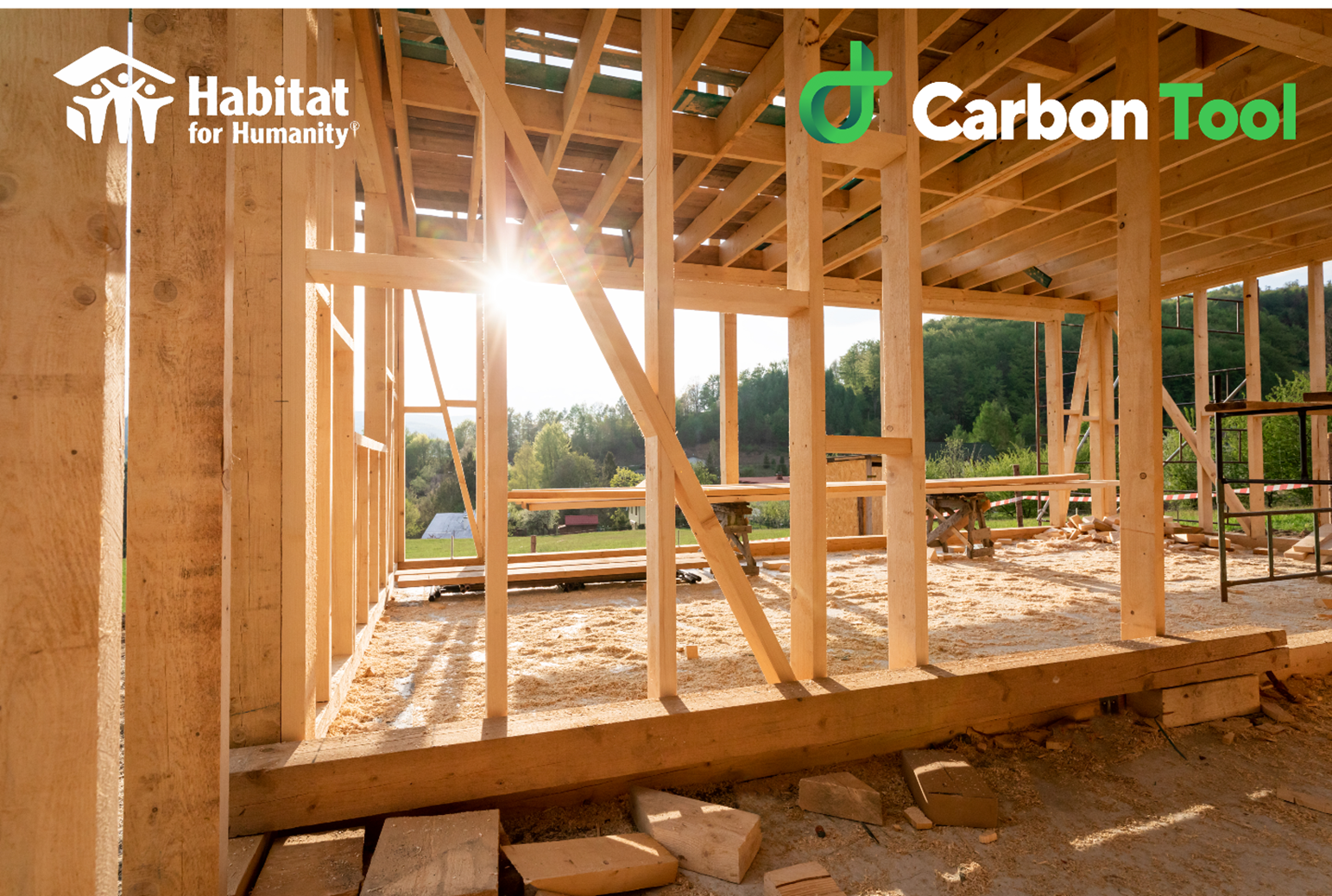
The Carbon Tool team had the privilege of contributing to a project that perfectly embodies this spirit: the environmental assessment of a duplex built by Habitat for Humanity. This home offers more than just shelter. It was designed to provide two families with safety, comfort and energy efficiency, integrating environmental responsibility in a way that supports a sustainable future.
The impact of this project goes far beyond its physical structure. It stands as a testament to what can be achieved when we build responsibly, caring equally for both people and the planet. Every choice, from materials to design, reflects a commitment to sustainability, community, and long-term value. By supporting projects like this, we were reminded that the most meaningful contributions are those that empower others and protect the world we share.
Measuring what matters: A life cycle perspective
To understand the environmental impact of the construction, our team used Carbon Tool’s Life Cycle Assessment (LCA) module, a feature designed to quantify the total carbon footprint of a building from start to finish.
Using a robust methodology aligned with EN 15978 and ISO 14040/14044, the analysis evaluated every stage of the building’s life cycle, by a true “cradle-to-cradle” approach, from the extraction of raw materials and construction, through decades of use, all the way to end-of-life recycling and reuse.
The project achieved remarkable results:
- 17% reduction in embodied carbon compared to a conventional concrete structure.
- Class B rating, equivalent to 439 kgCO₂e/m², placing the duplex among the better-performing residential buildings in its category.
- Most emissions (around 87%) came from operational energy use, emphasizing the importance of efficiency measures and renewable energy integration.
By choosing a timber structure, Habitat for Humanity managed to significantly reduce embodied emissions, demonstrating that sustainability is not reserved for premium projects, but can and should be part of affordable housing too.
The role of the Carbon Tool LCA module
The LCA module is one of the core strengths of Carbon Tool, a flexible, cloud-based solution that helps project teams understand, measure and reduce the environmental footprint of buildings and materials.
For the Habitat project, Carbon Tool allowed the team to:
- Centralize all project data in a secure, traceable system,
- Apply verified emission factors from international databases,
- Evaluate both embodied and operational carbon,
- Generate a transparent, data-driven report to support design decisions and sustainability benchmarking.
Unlike complex modeling tools, Carbon Tool makes LCA accessible to a wider range of stakeholders – architects, engineers, and NGOs alike –, helping them turn sustainability into a measurable, actionable process rather than an abstract goal.
Giving, building, measuring impact
For us, this project represents the best kind of collaboration: one that blends human compassion with technical precision.
Habitat for Humanity builds homes that change lives. By combining their mission with our tools, we were able to quantify the positive environmental impact of their work and highlight how thoughtful material choices can make a real difference, not just for the families who will live there, but for generations to come.
It’s a reminder that sustainability isn’t about doing less, it’s about doing good, consciously. Every efficient material, every low-carbon choice, every reused resource adds up to a story worth telling.
Responsible action and measurable impact
As we reflect on the past year, we are grateful for the projects that allowed us to turn data into impact.
Meaningful progress comes from using knowledge, creativity, and innovation to build a fairer, cleaner, and more resilient built environment.
Through collaborations like this, Carbon Tool continues to empower organizations to track, compare, and improve their carbon performance, helping the built environment take measurable steps toward net zero.
Together, we can turn every responsible decision into a bridge between the present and the future — delivering long-term value for communities, the planet, and the generations that will inherit our world.
Gain Sustainability Insights
Stay informed
Press releases and company announcements delivered directly to your inbox. No marketing emails.
Ready to turn carbon data
Join the companies using CarbonTool to measure emissions, manage risk, and report with confidence. Start free. No credit card, no sales call.