Răzvan Nica at ESG Romania 2026: Turning Data into Decarbonization Strategies, with AI Supporting Human Expertise
Reading
2 min total
0%
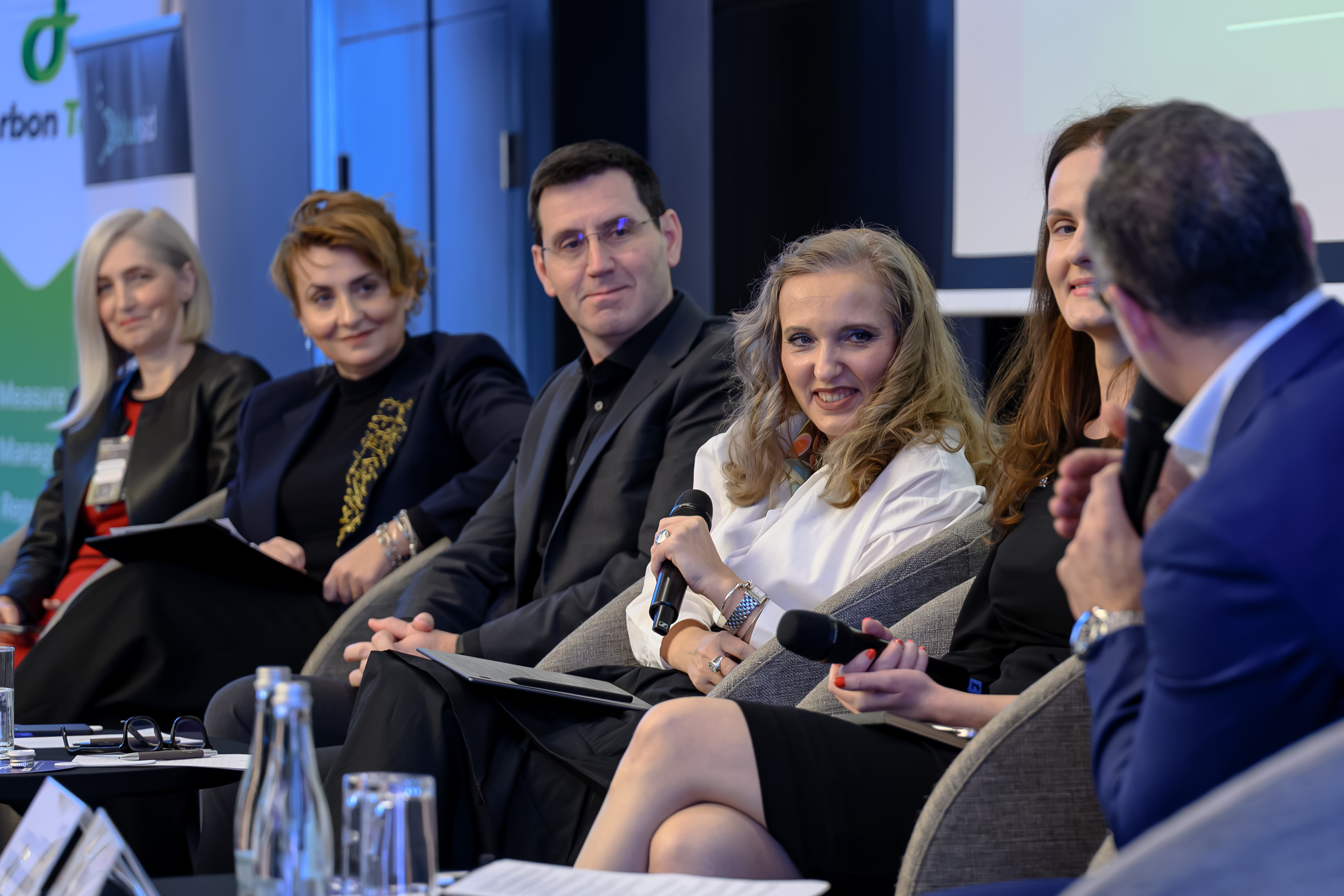
At ESG Romania 2026, organised by GovNET in Bucharest on 19 November, Răzvan Nica, founder of BuildGreen and CarbonTool, joined a panel that moved from climate risk and financing to data, verification and AI. Moderated by Adrian Ion (GovNET Romania), the panel also included Loredana Artenie (UNIQA Sustainable), Ioana Voinescu (BCR), Tulia Cășvean (Transavia) and Isabela Stefoni (PORR Construct Romania).
The data is already in the company
Many companies already hold the information they need, spread across departments. Răzvan’s starting point was simple. “This data exists. Accounting has the costs. Operations have the meters that measure consumption in a building. Procurement has its own data. All of it can be connected.”
This is where CarbonTool comes in, he explained. It brings that information together so it can be tracked, found and used in decarbonization strategies, for short-term measures as well as long-term ones.
A short history to work with
The difficulty is time. For years, energy data in buildings came from a few sources, mainly utility suppliers and general metering, while main equipment and individual areas were rarely monitored. “Data from two or three years ago is quite generic,” Răzvan said. “Monitoring is now much more careful, so we can see where consumption happens and what can be reduced first.”
Correlated data also shows where to start. On the panel, Răzvan estimated that 20 to 30% of consumption can be cut through better management alone, before any new equipment is installed.
Fast analysis, human responsibility
The moderator raised a case in which AI tools misread a company’s sustainability data during a certification process. Răzvan’s answer started with the data itself. “Data must be accurate, compliant and verified before it is used, possibly also with a tool that uses AI. But AI cannot take on responsibility, which always stays with the consultant.”
He was clear about what AI does well. “We have all experimented with it. It can analyze data much faster than we can and create charts that are relevant for an expert.” Asking it to produce the full report, judge a certification level or issue recommendations is a different matter, and that is where mistakes appear.
That is why a consultant needs to step in at key stages, to filter the output and check whether the proposed measures apply to that project. “AI never has the context of the person who sees the asset, who knows the organization and how it works overtime. You cannot put all that context into a model.”
Gain Sustainability Insights
Stay informed
Press releases and company announcements delivered directly to your inbox. No marketing emails.
Ready to turn carbon data
Join the companies using CarbonTool to measure emissions, manage risk, and report with confidence. Start free. No credit card, no sales call.